Monday, September 4, 2017

The particle-like and quantum character of cognition


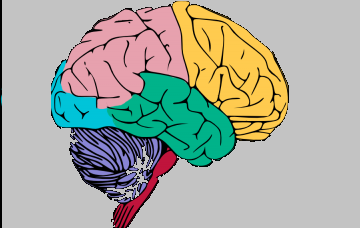
My book, 'The Science of Consciousness,' was published in 2015. Since then, new methods that can investigate brain activities in vivo have verified many of the book's observations. For example, the brain is a self-organized physical system. In addition, a manuscript, 'Relationships between short and fast brain timescales,' proposes the particle-like and quantum character of consciousness for the first time in a scientific publication. The article has been published in Cognitive Neurodynamics, an interdisciplinary, peer-reviewed journal with coauthors Arturo Tozzi from the University of North Texas and James Peters from the University of Manitoba. You find a summary of the manuscript below. 

Quantum mechanics describes cognitive and social phenomena; memories and decisions exhibit a holographic organization. Electric activities form oscillations with different timescales in the brain, leading to different functional and psychological outcomes. Activities occurring at micro-levels can be projected to macro-levels, indicating that larger-scale brain activities have counterparts in the lower level ones. Based on their entropy, electrical activities form trajectories taking place on donut-like manifolds. Ideas and concepts might arise by combining different functional and anatomical structures of the brain. Duality, i.e., the equivalence of two seemingly different systems, characterizes spatiotemporal brain activities, independent of their inter-and intra-level relationships, strength, magnitude, and boundaries. Physiological manifestations of consciousness are the outgrowth of the self-regulating electric activities of the brain.

Watch my YouTube video, Can quantum mechanics explain consciousness? Exploring the particle mind for a visual demonstration of the concept.  


Read the whole article in Cognitive NeurodynamicsAcademia, or ResearchGate.

The Book on Amazon                        Contact me               Mailing list 

The Science of Consciousness Post, your news about the mind
The Science of Consciousness, please join the discussion
Website: evadeli


Copyright © 2017 by Eva Deli


Monday, August 21, 2017

Einstein's blunder: understanding gravity


                                                                           video 


Newton could predict the falling of an apple. His law of universal gravitation is still used today for calculating the attraction of masses. Einstein's general theory of relativity describes gravity not as a force but as a consequence of spacetime curvature, a four-dimensional unified field on which every change occurs. Although Einstein's theory is mathematically elegant, his difficult equations disagree with the universe's global picture. 

What could be the source of the problem? The Standard Model, the most widely accepted physics theory, neither explains dark energy and dark matter nor incorporates gravity. Furthermore, relativity subordinates time as a minor, fourth dimension to space, despite their essential differences. For example, space can be navigated at will, whereas time is mostly irreversible. It requires energy to move in space, but time carries an irresistible change even if we are standing still. These and other differences make time and space incompatible quantities.

In the above video, time is considered a field with equal importance to gravity or space. The spatial geometry gives rise to pressure, which is felt as gravity at any point of space. The field of gravity creates a specific and precise pressure within every single particle. It holds the clouds and atmosphere, spins the Earth every 24 hours, circumnavigates it around the Sun at 67,000 mph, cause tides on Earth while holding everything down. Therefore, gravity is the consequence of spatial tightness on the smallest level, rather than attraction. 

The Science of Consciousness, which summarizes a coherent physical world view, gives a detailed explanation of gravity and related problems. Find it on Amazon.


The Science of Consciousness Post, your news about the mind
The Science of Consciousness, please join the discussion
Website: evadeli


Copyright © 2017 by Eva Deli

Monday, August 14, 2017

The role of women in the techworld


Google employee James Damore was fired for writing negatively about the role of women in the tech world. The firestorm that followed might make it worthwhile to take stock of women and men's changing roles in society. The memo evaluated the biological differences between the sexes. Males have a bigger brain size in proportion to their bodies. Yet, no sex difference can be found in working memory capacity, and female subjects regularly perform better on verbal abilities. Males do better on tests that measure visual-spatial skills, such as spatial perception and mental rotation. Looking for the origin of this sex difference, it is good to go back to biology. Predators can catch their prey because larger brains help them to better maneuver in space. However, the male brain's enlargement probably has more to do with reproduction and sex than catching dinner. The early history of romance probably was not a Cinderella story, but a fist-fight against other suitors, raiding, and kidnapping, which favored men with superior space orientation. Does spatial orientation is an advantage in programming and the tech world? Not likely.

Does orientation in space give men more tremendous success in the boardroom? The masculine character trait of sensation-seeking, the willingness to engage in a novel or intense activity, might be advantageous in the fierce competition for leadership. A study published in Science has shown that girls, even as young as six years old, associate being "really, really smart" with men, and such stereotypes could have a life-long impact on their career choices. Until very recently, women could rarely not set foot in the male-dominated, intimidating corporate environment. Even in orchestras, women were not welcomed until the introduction of blind auditions in the 1970s. In blind auditions, the identity of candidates is concealed from the jury by a screen. Blind auditions have increased the chances of advancement of women by 50 percent. The percent of female musicians in the five highest-ranked orchestras in the nation has risen from 6 percent in 1970 to 21 percent in 1993 and 35 percent overall. Similar 'blind' hiring probably would advance women's professional opportunities elsewhere.

In the twentieth century, social transformations brought forth laws against discrimination, fraud, and whistle-blowers protection. For example, the nearly full participation of women in society (women entering the workplace and the sexual revolution) has created a more cooperative social climate for both men and women—better cooperation ushers in a more democratic and flexible social environment. A more accepting society nurtures trust, which is conducive to social and technological progress. Emotional intelligence in personal and professional situations is increasingly valued. Such feminization of the social environment leads to openness, trust, opportunities, and broader professional participation. 

However, the changing work environment also includes the mutual respect of the sexes. The recent exposure of Weinstein and others has exposed a sexist work climate. When powerful men get away with predatory, abusive behavior, equality between the genders remains illusory. Weinstein's downfall has opened the floodgates for exposing sexual misconduct. Will the wave of accusations and resignations change the work-culture for the better? Success should depend on the abilities and the will to make a difference. 


The book on Amazon                                          My mailing list                     


The Science of Consciousness Post, your news about the mind
The Science of Consciousness, please join the discussion
Website: evadeli
Copyright © 2017 by Eva Deli


Monday, August 7, 2017

Shopaholic: a silent addiction of our time


A hundred year ago or so the middle class in most parts of the world has lived in dire circumstances. Conveniences, which we take for granted, such as electricity, running water and indoor toilet were lacking, appliances, such as refrigerator, vacuum cleaner, lawn mower were non-existent. If you are reading my blog, then your life is very different from the above description. In our modern world, we rely on our increasingly sophisticated environment for support. We gaze into the screen of our cell phones, like Aladdin into the treasure cave. This gadget is a constant companion for communication with friends, family, weather forecast, news, appointment reminder, and for self-adulation. Cars are ubiquitous signs of material success, but in certain parts of the world such as in the US, cars are almost obligatory part of adult life. The home is the tremendous cultural indicator of personal, professional status, which holds utilitarian objects, personal mementos, and decorations that personalize the dwelling. Our reliance on our belongings, from the bed that provides a comfortable night rest, to the nourishing morning meal, ensures a stable, reliable lifestyle. Technologically advanced tools provide the backbone of modern existence, but conveniences also increasingly include visiting restaurants for a midday meal or picking up a coffee at Star Bucks. Advertisements and credit make it easy and almost unavoidable to roll out the bucks for new kitchen counter gizmo, or the jersey of your favorite player, the latest phone, or a goofy Halloween display.

However, the new gadget, appliance or technical gizmo is only interesting for a short while; it might be delegated to the closet corner, collecting dust and occupying valuable space before all its capabilities are figured out. So you paid good money to artificially reduce the size of your house. Goods, which supposed to support your lifestyle, now dangerously encroach on it as the things you enthusiastically bought a few months or years ago take up closet space. These goods handicap you because it is impossible to keep track of their existence. The stuff might be out of conscious perception, but it is uncertain what is lurking in the closet, attic or basement. Instead of serving your needs, these objects hinder your life. Like quicksand, they pull you down, hurting you when you least expect it: when you are in a hurry or managing an emergency.  

It can be shown that advertisements work by interfering with already existing intentions, desires. So buying goods in excess is a sign of mental hesitation: when we do not know what we want, everything seems to solve the problem. Goals serve the guidance and motivation for the future. The inability to focus on a goal you tend to invest hope in every sweet promise, which is brilliantly supplied by advertisers. A shopaholic might feel arousal of a treasure hunter, which grows into a strong urge to shop and buy the item. But buying gives only a temporary feeling of relief. Because all addictions stem from seeking power in the wrong places, remorse, feeling of guilt, which is necessarily followed, only aggravates the problem.

The lack of personal progress against the relentless progression of time translates into a loss of control and insecurity. Addictions serve the immediate, although painfully transient, gain of control, to catch up to others, to society, to time itself. To produce accomplishments quickly, without investing time and work, is only possible by cutting corners, by getting a good deal or feeling high. However, the problem just gets bigger at each repeated offense, after each shopping spree, because the aftereffect of these shortcuts is always the realization of loss and failure, which actually exacerbates the addiction. Is there hope for a change? 

Just like any other addiction, it takes long disciplined work to get your shopping addiction under control. Two ways to change: (1) Start a motivating activity that reins in your wayward attention. When you take part in an action that produces positive change, you spur an inner movement toward the future. (2) Give away your excess belongings. When you share with others, you make the world a better place and liberates you from guilt. The price of industrial products are coming down and probably will in the future. When you practice a thoughtfulness about your buying habits, you force yourself to focus on the future, which will turn into a habit. Focusing on the future is a goal-oriented living, whether you are saving money for a new house, car or retirement. Be patient! Success does not happen overnight. When you take your first step toward the future, toward a better life, it will generate a sense of movement. When you are moving forward, your restlessness and uncertainty will subside. Your better life is the greatest reward.

A more detailed explanation for some of these and other questions about the mind can be found in the book, The Science of Consciousness.


The Science of Consciousness Post, your news about the mind
The Science of Consciousness, please join the discussion
Website: evadeli


Copyright © 2017 by Eva Deli


Sunday, June 25, 2017

New, non-invasive treatment for brain diseases


The best current treatment for Parkinson's disease is deep brain stimulation by implanted electrodes deep within brain tissue. Brain stimulation was summarized in my earlier blog. The risk of operation makes this procedure a last resort in most cases. Also, finding the proper target site in the brain reduces the success rate of the procedure.

A new method, which applies high-frequency brain stimulation without immediate physiological effect, is being considered. When two slightly different and overlapping high frequencies were targeted at the anatomical target site, their net result is a new, subtracted frequency. Because the treatment does not require surgery, it eliminates operative and post-operative risks. In addition, the target site can be optimized at any time. The new method will be optimal for the treatment of Parkinson's disease and other brain conditions. 

Drawback? As of now, you cannot take your 'treatment cap' on the road just yet. Requiring a large device, the treatment is only available in a hospital setting. Also, it has only been applied in animals; the efficacy needs to be tested on people. Read the whole article.

The book on Amazon                                          My mailing list  


The Science of Consciousness Post, your news about the mind
The Science of Consciousness, please join the discussion
Website: evadeli
                  

Copyright © 2017 by Eva Deli

Sunday, June 4, 2017

Why do we need a new physical world view


Fresco of young woman

Our world is defined by technological progress and fast-paced social change, increasing our life's complexity. The scientific achievements of the twentieth century have been spectacular in technology, physics, and medicine and led to the sense that we can master and understand nature. The increasing amount of detail and the pace of change necessitated greater scientific specialization and made formal education increasingly important. 

Nevertheless, existing theories in physics fail to explain a long list of unsolved problems. The arrow of time, the cosmological constant, the interpretation of quantum mechanics and unification with general relativity, the nature of gravity, dark energy and dark matter, the microwave background horizon problem, and the big bang, Mach’s principle, physical information or the theory of everything remains unsolved. The unintuitive nature of some material strains education, making it difficult to attract a new cadre of bright and original thinkers into research. 

Reconsidering some fundamental questions in physics, such as time, gravity, or entropy, might lead to a new physical worldview. Such a hypothesis is the subject of my book, 'The Science of Consciousness.' Investigating entropic changes based on the energy/information exchange during interaction takes physics back to its basic understanding. Still, it is the only to achieve an encompassing and coherent, sorely needed clear worldview. 

Such insight might instigate a giant leap, turning quantum mechanics more intuitive. It might explain the origin of mass, show the operational principle of gravity, throw light on black holes, and space's structure. Demystifying physics would boost morale, inspire ideas, and increase public engagement and enthusiasm for scientific and technological research funding. It would attract a new generation of young people into academic research. This new physical worldview, which includes consciousness, can inspire innovative methods to cure neural and mental diseases. The mind is an inextricable part of the universe. Being part of something bigger should give us a sense of ownership, belonging, and responsibility: Atman and Brahman are one. 


The book on Amazon                                          My mailing list     
                

The Science of Consciousness Post, your news about the mind
The Science of Consciousness, please join the discussion
Website: evadeli


Copyright © 2017 by Eva Deli

Sunday, May 28, 2017

The structure of the Cosmos


The vacuum energy problem is one of the most significant unsolved problems in quantum mechanics. The long list of unsolved problems in physics indicates that the Standard Model might need mending or be outright replaced. The above video highlights two issues with Einstein's relativity: 1, space in a vacuum is flat and 2, objects curve spacetime. The above video introduces a new physical worldview, which points toward the unification of quantum mechanics and general relativity. Dividing the universe with an information-blocking horizon is congruent with the holographic principle proposed by Leonard Susskind. Rethinking the basic structure of space might solve the contradictions mentioned above in physics, and it obeys Mach's principle, explains gravity, and turns quantum mechanics into comprehensible and intuitive science. 

Heisenberg uncertainty principle: 
The video explains that the particle wave function and the spatial curvature changes remain related. Increasing speed corresponds to higher frequencies and positive field curvature (space contrasts). This way location is more specific, but the velocity is uncertain. In contrast, lower frequencies correspond to lower speed, but the negative curvature of space (which expands) leads to an uncertainty of location. This uncertainty reaches its climax in the poles.

Vacuum energy
Quantum mechanics tells us that a vacuum is full of energy. But vacuum energy remains one of the unsolved problems in physics. Watch the above video to learn why a vacuum expands the universe by curving space into the fourth dimension.

General relativity  
Einstein's general relativity tells us that the fabric of spacetime is curved within and around large gravitational objects, but it is flat in a vacuum (see image below). On the other hand, the Michelson–Morley experiment to find the presence and properties of ether in 1887 proved that there was no such substance, therefore, no directional asymmetry in the universe. Because of this finding cosmos is considered isotropic. However, the conventional Michelson–Morley-type experiments could never detect dimensional anisotropy. Instead, dimensional anisotropy would form exponentially increasing energy needs of acceleration and the gravitational differences depending on the curvature of space.

Thus, the universe is infinite (due to the dimension increase of white holes), but it has finite boundaries (due to the dimension decrease of black holes). Moving with constant speed corresponds to a movement along latitude. Therefore it would bring one back to the starting point.


Massive object (such as a planet) curves spacetime according to general relativity. 


Mach's principle:
Dark energy (the universe expansion) needs a better explanation. Although the expansion is far smaller than the calculations would suggest, four-dimensional white holes could expand the universe at an accelerating rate. Dimensional anisotropy also satisfies Mach's principle. Read the whole article or view it on Academia  The above-proposed structure also leads to a cosmological evolution via interaction that engenders consciousness. So we are an organic, inalienable part of the universe.

The book on Amazon                                          My mailing list                     
The Science of Consciousness Post, your news about the mind
The Science of Consciousness, please join the discussion
Website: evadeli

Would you recommend this article to others? Voice your opinion below. 


Copyright © 2017 by Eva Deli