Showing posts with label consciousness and emotion. Show all posts

Wednesday, July 31, 2024

How Important is Emotional Reasoning?


Neuroscience has made significant progress in understanding the brain, but the nature of consciousness still needs to be explored. Meanwhile, recent spectacular advancements in artificial intelligence promise the possibility of machines achieving human-like cognitive abilities. At the core of both systems is a fundamental interplay of stimuli and response, requiring a deep understanding of the physical environment. Consequently, quantum mechanics and general relativity can be applied to the complexities of human behavior, such as the challenges of predicting, controlling, or retracing our thoughts. This landmark book investigates the nature of consciousness through the lens of physics rather than neuroscience.

Physics has provided a powerful explanation for diverse phenomena in the past. The fermionic mind hypothesis is a physics-based perspective on consciousness as an irreducible entity akin to particles—the fundamental units of energy or matter. The fermionic mind hypothesis emerges as a tour-de-force synthesis and framework for understanding consciousness, reimagined as the elemental unit of intellect. It highlights particle organization, a fundamental structure that cannot be understood as the sum of its parts, as the essential analogy between fermions and consciousness.

The book "Emotional Reasoning: Insight into the Conscious Experience" presents an engaging scientific narrative that explores some of humanity's oldest and most profound questions. What is consciousness? What are emotions? How can a physical brain create a subjective experience? Do we have free will? Engaging and penetrating, Emotional Reasoning represents a groundbreaking perspective that will surprise you at every turn. It will enhance your confidence by helping you understand yourself and your place in the cosmic order. Beyond neuroscience, the book holds profound implications for artificial intelligence research. It reveals the intricate link between consciousness and the physical universe, echoing the philosophical insight of theoretical physicist John Wheeler: "The physical world is, in some deep sense, tied to the human being."

You can order the book "Emotional Reasoning: Insight into the Conscious Experience." 

Routledge Home


Copyright © 2024 by Eva Deli

Monday, September 4, 2017

The particle-like and quantum character of cognition


My book, 'The Science of Consciousness,' was published in 2015. Since then, new methods that can investigate brain activities in vivo have verified many of the book's observations. For example, the brain is a self-organized physical system. In addition, a manuscript, 'Relationships between short and fast brain timescales,' proposes the particle-like and quantum character of consciousness for the first time in a scientific publication. The article has been published in Cognitive Neurodynamics, an interdisciplinary, peer-reviewed journal with coauthors Arturo Tozzi from the University of North Texas and James Peters from the University of Manitoba. You find a summary of the manuscript below. 

Quantum mechanics describes cognitive and social phenomena; memories and decisions exhibit a holographic organization. Electric activities form oscillations with different timescales in the brain, leading to different functional and psychological outcomes. Activities occurring at micro-levels can be projected to macro-levels, indicating that larger-scale brain activities have counterparts in the lower level ones. Based on their entropy, electrical activities form trajectories taking place on donut-like manifolds. Ideas and concepts might arise by combining different functional and anatomical structures of the brain. Duality, i.e., the equivalence of two seemingly different systems, characterizes spatiotemporal brain activities, independent of their inter-and intra-level relationships, strength, magnitude, and boundaries. Physiological manifestations of consciousness are the outgrowth of the self-regulating electric activities of the brain.

Watch my YouTube video, Can quantum mechanics explain consciousness? Exploring the particle mind for a visual demonstration of the concept.  


Read the whole article in Cognitive Neurodynamics, Academia, or ResearchGate.

The Book on Amazon                        Contact me               Mailing list 

The Science of Consciousness Post, your news about the mind
The Science of Consciousness, please join the discussion
Website: evadeli


Copyright © 2017 by Eva Deli


Tuesday, May 27, 2014

Neurofeedback allows voluntary modulation of tenderness and affection


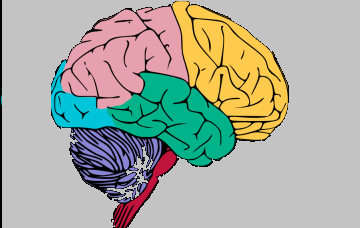
File:Diagram showing some of the main areas of the brain CRUK 188.svg


Emotional intelligence is gaining a scientific reputation as part of intellectual abilities. In all appearances, the brain rules the body, but emotions rule the mind. According to American neuroscientist Damasio: “People who lack emotions because of brain injuries often have difficulty making decisions at all. The brain stores emotional memories of past decisions, and those drive people's choices in life” Thus, emotions maintain mental homeostasis that dictates action to recover emotional stability. As Francois de La Rochefoucauld said, “If we resist our passion, it is more due to their weakness than our strength.”

Emotions are the sole motivators of intelligent animals, whose intensity can only change through interaction with the outside world. They are tools of survival, the means of communication with the outside world, and the basis of intellect. Positive emotions generate success through hope, trust, confidence, security, optimism. Emotions are experienced in a temporal infinitude. Pain or joy feels as if it would exist forever, but their experience evaporates. This fact has a significant role in motivation. Because pain and suffering are so quickly forgotten, we can find new strength to go on with life, and through the feeling of permanence, emotions do propel actions. A permanent phenomenon of life may disappear from conscious awareness, but negative emotions manipulate and corrupt mental abilities. 

Neurofeedback is a sensory reading of behavior related to brain activity that allows modification of thoughts, intentions, and actions. Video displays or sounds indicate brain frequencies in real-time, permitting a voluntary adjustment of brain function and behavior. Neurofeedback has been utilized in medical conditions from headaches to ADHD (attention deficit disorder). It has a potential for clinical treatment of emotional problems, such as depression, or to modify undesirable behavior. By giving direct, visual feedback, participants can master self-motivation, enhancing the learning potential. Recent work of direct current stimulation found enhanced memory capacity lasting for up to two weeks accompanied by chemical changes in the hippocampus. The positive changes generated by neurofeedback should be reinforced by regular, consistent, and focused practice to cement learning and positive emotional states, affection, or motivation.


Neurofeedback and transcranial stimulation represent an immense potential in neuroscience, psychology, and psychiatry. A better understanding of the mechanism of these techniques will significantly expand their use and potential.

Picture credit: The human brain By Cancer Res. UK


The book on Amazon Signs up for my mailing list.


Like this blog? Follow me on social media:       
                                                 
             
The Science of Consciousness Post, your news about the mind
The Science of Consciousness, please join the discussion
Website: evadeli


Copyright © 2014 by Eva Deli