Monday, February 27, 2017

Is time real?


Balance 


According to general relativity, clocks and time can only be appropriately defined in the presence of matter. In other words, interaction is essential for change, which is time. It is not time that measures change, but change literally formulates time. Without interaction, time stands still. This means that time is a local phenomenon, but the global state of the cosmos is static, and called the 'Principle of static time.' The Principle mechanism of static time views entanglement as a clock system that allows one to perceive the evolution of the universe. Deprived of such clock system, outside observers would find the universe static and unchanging. Therefore, time is the privilege of inside participants. Interaction would necessarily evolve toward polar singularities. The existence of poles, called white and black holes, also appears as the consequence of Einstein’s field equations.

Black holes are a natural choice for an information-saturated pole of the cosmos. Black holes have been identified indirectly by observing their gravitational effects, but as of today, the opposite pole has not been found. Einstein's equation hint of the existence of white holes, hypothetical regions with negative-curving, bulging topology, which deflect incoming energy, even light. Thus they are the source of illusory light rays; a fact reflected in their name and which would pose a significant challenge to their discovery.

So time or age expresses our topological 'distance' from the white holes (located within cosmic voids). Therefore time is information accumulation that manifests as a topological distance from the big bang. Thus, significant time travel is impossible for biological systems, but possible for material objects. You can find more detailed information in my book, The science of consciousness, or manuscript, Consciousness, a Cosmic Phenomenon.

Sign up for my mailing list to never miss a post. 


The Science of Consciousness Post, your news about the mind
The Science of Consciousness, please join the discussion
Website: evadeli


Was this article helpful? Voice your opinion below.

Copyright © 2017 by Eva Deli

Monday, January 23, 2017

Emotions, the energy states of the brain


Einstein's general relativity uncovered gravity as the field geometry measured by its effects. Consciousness evolved in interaction with the material world, absorbing its operational principles. Increasingly sophisticated responses to stimuli engendered a brain operation that mirrors the physical world. For example, society forms a temporal field analogous to gravity. We cannot see or touch the temporal field, but its presence constantly regulates our behavior. The temporal field can cause powerful emotional reactions, such as shame, pride, joy, etc. In this process, emotional self-regulation guides attention and cognitive functions, including perception, memory, thoughts, and behavior. We do not have to be conscious of our feelings to be regulated and influenced by them. 

Sensory perception is an automatic, involuntary process. We cannot 'decide' not to process sensory stimuli or read road signs because stimulus impinges on the mind by shifting the brain's energy balance. Moreover, sensory perception also requires energy, which the brain 'pays' for through the energy requirement of brain frequencies. Thus, sensory processing is an energy-information exchange with the environment. 

The brain's highly fluid neural organization allows an active balancing of electromagnetic gradients based on charge conservation. The above drawing represents the stimulus path from the sensory cortical surface toward the frontal associative regions. The energy requirement of neuronal activation extinguishes the information flow and forms an electric potential between the limbic and cortical areas, which reverses the flow via slow oscillations (Figure above, #2). The information flow reversal from the frontal brain recovers the neutral energy state. The sensory transmission toward the sensory cortex by fast oscillations and response by slow oscillations indicates the polarity effects of the brain's electromagnetic flows.

Computer simulations based on EEG, fMRI, and other techniques can pinpoint the tendency for unhealthy emotional states (i.e., the brain's energy balance) in patients and predict proneness for depression, PTSD (post-traumatic stress disorder), anxiety, and other conditions (there are already some results on this front). You can find more detailed information in my book, The Science of Consciousness, or manuscript, Consciousness, a Cosmic Phenomenon.


Sign up for my mailing list to never miss a post. 


The Science of Consciousness Post, your news about the mind
The Science of Consciousness, please join the discussion
Website: evadeli
Copyright © 2017 by Eva Deli

Monday, December 26, 2016

Is consciousness a cosmic phenomenon?


What is the place of intellect and consciousness in the universe? This is the subject of my article "Consciousness, a Cosmic Phenomenon" my article* in the Journal of Consciousness Exploration and Research (JCER). According to the hypothesis, mental processes are analogous to physical ones; like photons and emotions, the fundamental forces of motivation carry energy. Through inspiration, photons generate light, and emotions help recover mental balance. 

Cosmological evolution, which increases complexity, culminates in the intelligent mind; it also gives rise to the poles of the universe, the black and the white holes. Thus, just like material particles, the intellect is an elementary constituent of the cosmos. 

At the time of death, the sensory organs cease to operate. An electric spike can be measured about 60 to 120 ms after the body becomes pulseless. Without sensory interaction, the mind moves toward its polar position, information, or energy. The polarization triggers a journey toward one of the poles of the cosmos. An energy-rich, positive mind converges towards expanding white holes, whereas information-saturated negative souls become part of the black hole horizon. 

In the expanding white hole, space is infinite, yet everything feels neighborly, and the infinite feels like a moment. The opposite is true for black holes, where the moment feels like an eternity but is weighed down by a two-dimensional tightness, where everything is far and beyond reach. As an elementary particle, the universe joins with the mind and matter into an organizational unity. These three interconnected, interdependent building blocks form a fractal structure. Intelligent life is a microcosm of the universe, and the mind is an active participant in cosmic evolution. 

Read the whole article on the Journal website, Academia, or ResearchGate.

Learn more about consciousness on my YouTube channel


*Deli, E., Consciousness, a cosmic phenomenon—A hypothesis. (2016) Journal of Consciousness Exploration & Research 7(11): 910-930.


Sign up for my mailing list to make sure to see every post. 


The Science of Consciousness Post, your news about the mind
The Science of Consciousness, please join the discussion
Website: evadeli
Copyright © 2017 by Eva Deli

Monday, December 12, 2016

From Aristotle to Mach's principle

Image result for aristotle
Aristotle, marble portrait bust, Roman copy (2nd century BC) of a Greek original 


Our 21st-century world boasts a highly interconnected society, unprecedented technological development and increasing democratization all over the world, yet scientific literacy is lagging behind. Even science seem to be struggling with some basic questions, such as time, gravity or space. In many ways we still think in terms absolute time and space, inherited from Newtonian physics, However, the need for unique reference frame contradicts some basic, contemporary requirements of science, such as Mach's principle, which disfavors the existence of a particular orientation, i.e., reference frame. Although in a different context, the scientific and philosophical principle was debated since antiquity. For example, Aristotle viewed space only epitomizing the place of objects. Newton, however, built his theory on absolute space.

Aristotle's idea was reformulated in Mach's principle, which strongly motivated Einstein. According to Mach's principle, all locations and all motions are relative; the results of the measurements should not depend on the choice of coordinates assigned to events. Inertial mass is determined by the mass distribution of the universe and inertia is caused by the gravitational action of distant matter. Mach's revolutionary insight is the realization of the impossibility to measure changes with time. "Time is the abstraction at which we arrive by the changes of things." Nevertheless, in contrast to its name, 'relativity' it still contains absolute elements and does not resolve the problem of the origin of inertia and fails to follow Mach's principle.

Let's examine the global picture of the universe about Mach's principle. It is known that black holes have immense field strength. Current findings even show that black hole horizons are information blocking, two-dimensional firewalls that cannot be approached. This is only possible if black holes form the outer boundary of the universe. In this case, Mach's principle is automatically followed due to dimensionality differences of space. The exponentially increasing field strength close to the black holes would lead to greater inertia and the smaller field strength in cosmic voids would generate small inertia.

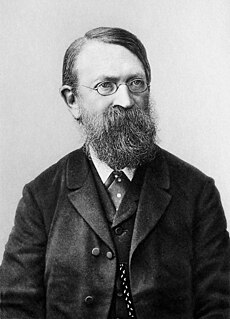
Ernst Mach 01.jpg
Ernst Mach, Austrian physicist, and philosopher 


In the Aristotelian view, a vacuum does not exist. In Newtonian physics vacuum is just a void, in quantum mechanics vacuum energy gives rise to virtual particles, in a process of constant creation and annihilation, and dictated by the Heisenberg uncertainty principle. The universe might agree with Aristotle with a twist, however. If a vacuum would increase the dimensions of the universe, then a vacuum would lead to the expansion of space and lead to the experience of dark energy. This vacuum would generate a pressure at opposite regions i. e., the black holes of the universe. The pressure extends into gravitational regions as excess gravity, called dark matter. This simple, organically unified picture of the cosmos leads to an intuitive understanding of space and time as fundamental, interconnected fields. More information can be found in my book, 'The Science of Consciousness.' Such organic unity of the cosmos certainly would fit well with Aristotle.

Sign up for my mailing list to never miss a post. 


The Science of Consciousness Post, your news about the mind
The Science of Consciousness, please join the discussion
Website: evadeli

Was this article helpful? Voice your opinion below.

Copyright © 2017 by Eva Deli


Monday, November 14, 2016

The physical foundation of the cosmos leads to Zeno's paradox


Zeno's paradox centers on the relative movement that can be viewed as a discrete series. The above illustration portrays the relative movement of Achilles and a turtle. In the paradox, Achilles is in a footrace with the tortoise. Achilles allows the tortoise a head start of 100 meters. Each racer starts running at some constant speed, one faster than the other. When Achilles will have run 100 meters, he is at the tortoise's starting point. During this time, the tortoise has run a much shorter distance, say 2 meters. It will then take Achilles some further time to run that distance, by which time the tortoise will have advanced farther; and then more time still to reach this third point, while the tortoise moves ahead. Thus, whenever Achilles arrives somewhere the tortoise has been, he still has some distance to go before he can even reach the tortoise. 

Intuitively, the running Achilles reaches and overtakes the turtle in a finite time. Nevertheless, Zeno's logic takes apart the movement into a series of discrete distances, which sections Achilles' motion into an infinite sequence regarding the turtle's position. Although Achilles gets infinitesimally closer to the turtle, he can never reach it.

The old philosophical puzzle might be representative of the universe's deep structure, the separate entities of space and time. Time represents compact dimensions forming standing waves of discrete energy vibrations. In contrast, space is the smooth spatial topology of the gravity field. The contrasting dynamics of time and space leads to the many contradiction of quantum mechanics and can lead to Zeno’s paradox. Zeno's paradox is an example of a discrete system interacting with a smoothly changing one.


The topology of space between the poles (black and white holes), demonstrated by a Breton hat


The global topology of the universe is formulated by the spatial field, demonstrated by a Breton hat above. The field curvature changes smoothly from the black holes toward expansion near the white holes, whereas the micro dimensions form standing waves, a quantized, step-wise progression between the poles. Constant frequency waves of the micro dimensions organize along the constant field curvature of space. The macro-and micro dimensions are connected via interaction, or decoherence, which ensures their congruent development and interdependent relationship, as shown in Zenon's paradox. This is the quality of wave decoherence in quantum mechanics. The connection between sequences formed of discrete series (quantum mechanics) and a field with smooth gradation (gravity) has been featured in my earlier post and YouTube video. Such orthogonal relationships can also be found in many other areas, from physical sciences to social phenomena. 


Gaussian (left) and Power-law distribution (right)

The compact dimensions maintain a minimal closed surface within each standing wave succession between the poles; inverse volume changes by Lorentz transformations enhance field curvature and pressure differences (above left). However, the curving field directs the participant's decision, and the participant's choice further modifies the field (as observed along the brim and the top of the hat). Hence, deterministic, irreversible, and self-perpetuating changes give rise to singularities, called poles in the curving field. The polar singularities stabilize the structure of the cosmos (shown above, right). 

The increasing gravitational differences of space versus the compact dimensions' minimal surface engender the large-scale spatial-temporal complexities and cellular structure of the universe and reflect the contradiction of Zeno's paradox: the smooth changes of the field occur parallel to the step-wise changes of energy. These discrete fluctuations in space might give rise to quantum phenomena in physical systems and form the basis of the quantum computer. Fractal and cellular structure reappears on many scales in the material world, biology, and society. Hence, quantum phenomena (correlation between discrete and smoothly changing systems) might be more general in the material world, biological systems, conscious processing, and society.


The book on Amazon                                          My mailing list                     


The Science of Consciousness Post, your news about the mind
The Science of Consciousness, please join the discussion
Website: evadeli


Copyright © 2017 by Eva Deli


Tuesday, October 4, 2016

The benefits of cognitive and physical training on mental functioning


Older women

Executive function refers to the ability to flexibly select information, maintain, update, and generalize meanings and fluidly innovate ideas, while at the same time sustaining a goal in mind. Older adults consistently perform lower in executive and memory tests, than younger people, because physical, cognitive and memory decline lead to problems in executive function. However, physically active adults tend to maintain greater flexibility, energy (mental and physical) in old age. With increasing life expectancy and skyrocketing costs of end-of-life care, preserving psychological and physical health into old age is also a social, economic issue.


Imaging methodologies can study how cognition and brain function is related to functional changes in the brain. When advanced reasoning training, cognitive training and physical training were compared in a randomized, comparative trial in on older adults (56–75 years), both physical and cognitive exercises were found beneficial. However, while advanced reasoning training could increase the resilience of neural function and overall cognitive brain health, Goal Management Training benefited working memory, verbal and abstract reasoning; it also reduced depressive symptoms. Interval training might stall and even reverse the signs of aging because it triggers the formation of new neurons in the hippocampus, a critical brain region for learning, memory and mood regulation. Learning to play a musical instrument also has been shown to prevent mental decline. 

The present results thus provide clinically-relevant evidence that aerobic exercise and cognitive reasoning training improves brain health differently. As life expectancy increases, the cognitive benefits of healthy habits, such as complex reasoning and aerobic exercise is becoming more critical to understand. Future trials might determine the possible additive effects of combined protocols, such as reasoning training/physical activity, in cognitive vitality. Evidence supports the intuitive view that any exercise program is better than none and that exercise improves life functionality more than specific cognitive training protocols. However, there is no better time to start exercising then right now. Do not forget weight-bearing exercises, which improve coordination and balance, and prevent osteoporosis! However, exercise is beneficial at any age, and if you start right now, you will be way ahead of the competition by the time your hair turns gray. 

  
 Mailing list                                


The Science of Consciousness Post, your news about the mind
The Science of Consciousness, please join the discussion
Website: evadeli


Copyright © 2017 by Eva Deli



Monday, June 6, 2016

Brain stimulation, potentials and limitations


Human brain By NIDA


Electrodes placed on the cortical surface can measure the brain's electric activity. An EEG or electroencephalogram picks up voltage fluctuations resulting from an ionic current of the cortical neurons located close to the brain's surface. Recently, it has been noted that the process can be reversed. Electrical, magnetic, radio waves or focally targeted sources can modulate the brain's electric activity. Brain stimulation can be used in the treatment of disease and for mental manipulation of healthy subjects. 

In disease:
The number of brain areas that can be manipulated with electric impulses toward physiological and physical changes is growing. Brain stimulation uses electrodes implanted deep in the brain to influence activity there. It can be an effective treatment for Parkinson's disease, depression, chronic pain, and other movement disorders, but the results have been inconsistent so far. For example, individual differences in the position of brain structures can influence the procedure's effectiveness. Potentially dangerous side effects can occur due to the incision. Deep brain stimulation without incision is a brainwave "mirroring" of neural oscillations between the two hemispheres. The new technique is a promising treatment for post-traumatic stress disorder (PTSD) patients. It improves insomnia, depressive mood, and anxiety, and the results seem to be durable through 6 months after the treatment. 


In healthy subjects:
In healthy subjects, brain stimulation can enhance creativity. Stimulation of the frontal brain has increased performance and endurance in tasks requiring sustained attention and focus. Magnetic stimulation improved spatial-precision memory. Transcranial direct current stimulation with slow oscillations during slow-wave sleep almost doubles overnight memory retention. It improves the piloting skills of novice pilots. Studies in rodents have shown motivation and behavior modification by manipulating the VTA  (small area at the base of the brain, marked on the human brain image), potentially treating addiction and other mental problems. However, the treatments are based exclusively on empirical studies because the theoretical background for brain stimulation still needs to be included.

A new, physics-based hypothesis of consciousness is urgently needed to give brain stimulation a strong predictive power. The book 'The Science of Consciousness considers brain frequencies and emotions as the brain's energy states. For example, enhanced brain frequencies are essential in focused activities and during physical or emotional pain. In contrast, decreasing frequencies correspond to joy and creative states. However, in the brain's complex operation, the relative change of the frequencies and their rhythm is essential, not their absolute value. Changing the energy balance through manipulating brain frequencies has a powerful physiological influence, making it an efficient modulator of thinking, emotional states, and behavior. Long-term stimulation can modify the strength or even induce the formation of new synaptic paths, leading to learning and some possible long-term consequences. 

Infrared light (IR) has recently become popular as a high spatial resolution and safe method to regulate neural function. Although the underlying mechanism remains unclear, infrared neuromodulation methods have been used to treat neural activation, central nervous system disorders, and cognitive enhancement. IR neural modulation (INM) can increase cerebral blood flow and improve emotional and mental functions. Behavioral modifications can stabilize brain stimulation's effects. 

Brain stimulation is intriguing and has enormous promise, meaning it is here to stay. Currently, it is easier to justify balancing the potential benefits and side effects in the clinic than in education, in a classroom, or at home.


Sign up for my mailing list to never miss a post. 

The book Emotional Reasoning: Insight into the Conscious Experience is published on August 30, 2024. 

Order:

Barnes & Noble

Amazon Books

The Science of Consciousness Post, your news about the mind
The Science of Consciousness, please join the discussion
Website: evadeli

Copyright © 2017 by Eva Deli