Showing posts with label absolute space - Mach's principle. Show all posts

Friday, March 6, 2020

Is the cosmos infinite or discrete?


Is the cosmos infinite or discrete? Currently, physics cannot decide this question. Establishing a solution to this question has ramifications for our understanding of the cosmos, theoretical physics, pure mathematics, and even programming. 

The answer is related to dimensionality. In mathematics, the number of dimensions reflects the number of independent characteristics you can adjust. In quantum mechanics, every possible position of the electron defines a different state space, but holographic spaces, such as black holes, have a limited description.

Is the cosmos infinite or discrete? Separating a compact space from the universe by an information blocking horizon gives rise to a wave function, i.e., the particles. Compact dimensions define the wave function's discrete frequencies. Insulation of the wave function frees the particle from gravity, which permits entanglement. The waves can form fluid-like behavior, such as interference and entanglement. For example, interference occurs as ripples combine on the surface of a pond.

The universe is in constant change. Interaction switches the rates of oscillations of the compact dimensions, but it also changes the volume of space (Figure 1). The universe acts like a giant clock, with the compact dimensions forming its small hand. Gravity is the big hand, which indicates our distance from the poles (white and black holes); we are located at about halfway between the poles (Figure 2). The answer to the question in the title is both discrete and infinite! When viewed within gravity regions, the universe is discrete, but it expands into infinity within white holes (the cosmic voids). 
Figure 2. Compact dimensions are separated from the space top; interaction changes the volume of space around entangled particles. Interaction changes the shape of space and forms the smooth topology of gravity. 


Figure 2. The horizontal lines indicate the compact dimensions. Energy levels are increasing, but frequencies are decreasing from the top toward the bottom. Interaction changes the gravity (S shape) between the poles of the universe (black holes and white holes). 


The book on Amazon                                          My mailing list                     


The Science of Consciousness Post, your news about the mind
The Science of Consciousness, please join the discussion
Website: evadeli


Copyright © 2020 by Eva Deli


Monday, August 21, 2017

Einstein's blunder: understanding gravity


                                                                           video 


Newton could predict the falling of an apple. His law of universal gravitation is still used today for calculating the attraction of masses. Einstein's general theory of relativity describes gravity not as a force but as a consequence of spacetime curvature, a four-dimensional unified field on which every change occurs. Although Einstein's theory is mathematically elegant, his difficult equations disagree with the universe's global picture. 

What could be the source of the problem? The Standard Model, the most widely accepted physics theory, neither explains dark energy and dark matter nor incorporates gravity. Furthermore, relativity subordinates time as a minor, fourth dimension to space, despite their essential differences. For example, space can be navigated at will, whereas time is mostly irreversible. It requires energy to move in space, but time carries an irresistible change even if we are standing still. These and other differences make time and space incompatible quantities.

In the above video, time is considered a field with equal importance to gravity or space. The spatial geometry gives rise to pressure, which is felt as gravity at any point of space. The field of gravity creates a specific and precise pressure within every single particle. It holds the clouds and atmosphere, spins the Earth every 24 hours, circumnavigates it around the Sun at 67,000 mph, cause tides on Earth while holding everything down. Therefore, gravity is the consequence of spatial tightness on the smallest level, rather than attraction. 

The Science of Consciousness, which summarizes a coherent physical world view, gives a detailed explanation of gravity and related problems. Find it on Amazon.


The Science of Consciousness Post, your news about the mind
The Science of Consciousness, please join the discussion
Website: evadeli


Copyright © 2017 by Eva Deli

Monday, December 12, 2016

From Aristotle to Mach's principle

Image result for aristotle
Aristotle, marble portrait bust, Roman copy (2nd century BC) of a Greek original 


Our 21st-century world boasts a highly interconnected society, unprecedented technological development and increasing democratization all over the world, yet scientific literacy is lagging behind. Even science seem to be struggling with some basic questions, such as time, gravity or space. In many ways we still think in terms absolute time and space, inherited from Newtonian physics, However, the need for unique reference frame contradicts some basic, contemporary requirements of science, such as Mach's principle, which disfavors the existence of a particular orientation, i.e., reference frame. Although in a different context, the scientific and philosophical principle was debated since antiquity. For example, Aristotle viewed space only epitomizing the place of objects. Newton, however, built his theory on absolute space.

Aristotle's idea was reformulated in Mach's principle, which strongly motivated Einstein. According to Mach's principle, all locations and all motions are relative; the results of the measurements should not depend on the choice of coordinates assigned to events. Inertial mass is determined by the mass distribution of the universe and inertia is caused by the gravitational action of distant matter. Mach's revolutionary insight is the realization of the impossibility to measure changes with time. "Time is the abstraction at which we arrive by the changes of things." Nevertheless, in contrast to its name, 'relativity' it still contains absolute elements and does not resolve the problem of the origin of inertia and fails to follow Mach's principle.

Let's examine the global picture of the universe about Mach's principle. It is known that black holes have immense field strength. Current findings even show that black hole horizons are information blocking, two-dimensional firewalls that cannot be approached. This is only possible if black holes form the outer boundary of the universe. In this case, Mach's principle is automatically followed due to dimensionality differences of space. The exponentially increasing field strength close to the black holes would lead to greater inertia and the smaller field strength in cosmic voids would generate small inertia.

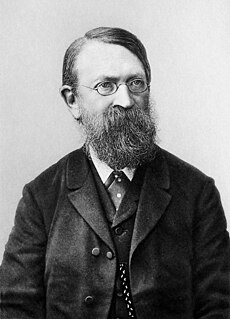
Ernst Mach 01.jpg
Ernst Mach, Austrian physicist, and philosopher 


In the Aristotelian view, a vacuum does not exist. In Newtonian physics vacuum is just a void, in quantum mechanics vacuum energy gives rise to virtual particles, in a process of constant creation and annihilation, and dictated by the Heisenberg uncertainty principle. The universe might agree with Aristotle with a twist, however. If a vacuum would increase the dimensions of the universe, then a vacuum would lead to the expansion of space and lead to the experience of dark energy. This vacuum would generate a pressure at opposite regions i. e., the black holes of the universe. The pressure extends into gravitational regions as excess gravity, called dark matter. This simple, organically unified picture of the cosmos leads to an intuitive understanding of space and time as fundamental, interconnected fields. More information can be found in my book, 'The Science of Consciousness.' Such organic unity of the cosmos certainly would fit well with Aristotle.

Sign up for my mailing list to never miss a post. 


The Science of Consciousness Post, your news about the mind
The Science of Consciousness, please join the discussion
Website: evadeli

Was this article helpful? Voice your opinion below.

Copyright © 2017 by Eva Deli