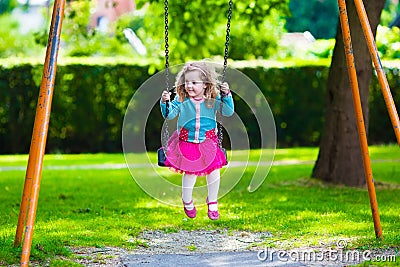
Gravity has a powerful influence not only on inanimate matter; in biological systems, it governs growth and balance. For this reason, gait (the degree of side-to-side movement during walking) is a reliable indicator of a mental decline in elderly people. But gravity also creates the pressure that slows the biological clock: the body ages faster in free space. Changes in gravity also regulate our mood, which is present in infancy. Children the world over enjoy swings and rocking in a cradle. Even adults enjoy rocking chairs, free falls during parachuting, and bungee jumping. Rollercoasters simulate gravity through upward vertical motion, increasing the feeling of heaviness. At the top, there is a sudden transition from a contracted feeling to one of weightlessness and expansion.
Emotions also imitate gravity. Relationships are analogous to the gravitational pull. Our attachments, i.e., temporal or emotional gravity, generate an emotional rollercoaster that intimately regulates our mood and the degree of mental comfort. As gravity constricts the body, emotional gravity is a feeling of tightness. Throughout history and across all cultures, the transitions from emotional gravity (tension) to emotional release (a sense of spaciousness) have been recognized as pleasurable. It is no accident that we simulate this transition in so many ways. Even crying in the face of difficulty or after a tragedy is such a process. Children's stories from ancient times depict this transition from emotional tension to release. The hero suffers, and the greater his suffering is, the more enjoyable his glorification afterward. Adventure, horror, cliffhangers, and suspense operate on the same principle. We endure every adverse predicament and emotional tension, and the payoff at the end provides us with emotional release. This is also the secret to the success of the twenty-four-hour news channels.
Therefore, the environment intimately regulates our mood by controlling emotional gravity. Lack of temporal gravity is formed by low-entropy conditions (order, beauty), which produce the feelings of satisfaction, happiness, well-being, relaxation, and excitement associated with the new. Interest and body position are open and trusting. The excited dog, smelling around or enclosed monkeys, is willing to pull a lever to take a peek at the outside world: the new. The child curiously moves forward in a unique situation with excitement (representing the original energy) or pulls back in worry or fear (indicating temporal gravity, the need for safety).
Although the new is an elementary need, overwhelming and fast-paced information, such as flickering light, strongly delineated patterns, or repeating mechanical noises, provokes stress. In addition, the temporal tightness of emotional gravity constricts the mind, forming emotions such as anger, apathy, fear, paranoia, and a tendency to run, freeze, or cling to the past. Even the language describes fear and guilt as demanding and heavy. This is why meditation is a powerful practice for those who experience stress, including most people. If you feel stressed, you should serve yourself beauty and joy. Even taking a deep breath should expand a constricted soul and mind.
Contact me, sign up for my Mailing list.
Discover more about consciousness by ordering my book, "Emotional Reasoning: Insight into the Conscious Experience."

|