Saturday, January 19, 2019

The expansion of the universe: Is dark energy allowed?


String theory is the youngest and most abstract of the fundamental theoretical frameworks of physics. String theory expresses the hope that all the different forces, particles, interactions, and manifestations of reality are tied together as part of the same fundamental framework. Particles are tiny vibrating strings, and each type of vibration corresponds to a different particle. But a new article has shown that string theory is fundamentally incompatible with our current understanding of "dark energy," - which is the only explanation for the accelerated expansion of our current universe. The controversy, which even questions the Higgs boson's existence, has generated a lot of talk in the physics community.

In the next few years, the universe's accelerated expansion will be measured more accurately than ever before, allowing the hypothesis to be tested experimentally. More details about the debate and a more visual explanation of the problem go to the article: String theory: Is dark energy even allowed? For a purely physical approach, read the original article: de Sitter swampland conjecture and the Higgs potential.

Picture credit: Andrew J. Hanson, Indiana University. / CC BY-SA (https://creativecommons.org/licenses/by-sa/3.0)


The book on Amazon                                          My mailing list                     


The Science of Consciousness Post, your news about the mind
The Science of Consciousness, please join the discussion
Website: evadeli


Copyright © 2019 by Eva Deli

Friday, January 4, 2019

Insecurity, fear, and the tools to leave them all behind


Our lives depend on trust; the food we eat and the water we drink supply our survival and well-being. We trust that cars stop at the red light and allow others to pass. Without having faith in others or the system, we become stiff, tense, and suspicious of everything. Overprotected children, as young as 14 months old, grow anxious around strangers.

Danger provokes primal physical reactions, such as sweating, an increased heart rate, and elevated adrenaline levels in the blood, known as the fight-or-flight response. In some cases, anger can spur constructive change, but fear causes paralysis. The sense of dread prevents constructive reasoning, thinking, and the capacity to plan or act. “Fear makes the wolf bigger than he is,” says the German proverb. Fear shoots down every opportunity for help.

The impending instability of fear triggers a constant and futile search for security in the environment. The thoughts of vulnerability kill the likelihood of success. Presenting your story as a failure and hopeless case will manifest itself as a failure in real life. The perceived difficulty can trigger fear and procrastination regarding the subject matter. Inaction is a sure way to cement immobility, indecision, and helplessness.

Trust, like a chandelier, provides a complete, coherent picture. In contrast, fear is like a flashlight; it focuses on a small, highly detailed section of reality. Try to recognize fear in yourself. Whenever fear influences your decisions, take action! As jumping into cold water cures timidity, the most effective way to eliminate fear is to start a meaningful activity. The intimidating and often nervous first step generates familiarity, which is profoundly empowering. Because fear is a paralyzing tightness of pressure, almost any small but decisive action pierces its hold and automatically and instantaneously diminishes the fear response. Defeating fear in this way boosts confidence. Doing this exercise will not only increase your fear resistance but will also reformulate your life.

Abused and neglected dogs can be effectively rehabilitated by introducing a daily feeding and walking schedule. Creating order is a powerful stress eliminator for people, too. Children thrive on the predictability and organization of their lives. Maintaining order in the environment helps balance and calm the mind. Create order in your surroundings by organizing your daily, weekly schedule into a regular, predictable routine, which gives a profoundly empowering sense of control.
                         

Discover more about consciousness by ordering my book, "Emotional Reasoning: Insight into the Conscious Experience."
Routledge Home


The Science of Consciousness Post, your news about the mind
The Science of Consciousness, please join the discussion
Website: evadeli


Copyright © 2019 by Eva Deli

Wednesday, January 2, 2019

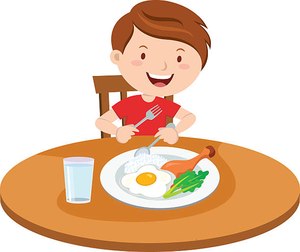
Breakfast and academic performance in children


Kid Eating Breakfast Clipart Image


Breakfast positively affects learning, behavior and school performance in children, especially at a young age. It provides essential nutrients to keep your energy levels up throughout the day. Iron, B vitamins (folate, thiamine, riboflavin, niacin, vitamin B6, and vitamin B12) and Vitamin D are approximately 20–60% higher in children who regularly eat breakfast compared with those, who skip it. Studies have shown that eating a meal first thing in the morning decreases hunger throughout the day. Regular breakfast (including ready-to-eat-cereal) reduces the likelihood of being overweight. This occurs because children who do not eat morning meals are less likely to be physically active and have a lower cardiorespiratory fitness level.

The benefits of breakfast were apparent in all children whether they were well-nourished or they were from deprived, undernourished backgrounds. Habitual breakfast (frequency and quality) have a positive impact on children's academic performance with most evident effects on mathematics and arithmetic grades. Read the article

The morning meal is a crucial ingredient for achievement at any age. 


The Book on Amazon                        Contact me               Mailing list 


The Science of Consciousness Post, your news about the mind
The Science of Consciousness, please join the discussion
Website: evadeli


Copyright © 2018 by Eva Deli

Sunday, December 23, 2018

The Social Determinants of Chronic Diseases


Education and social conditions determine the quality of life. The place we are born, grow, work, and live, determines our attitude and ability to maintain health, or proneness to disease. The World Health Organization confirms the significant social element of diseases. Several theories try to explain the determinants of disease.

Life Course Theory recognizes the accumulation of socioeconomic conditions over the life course. The life-course theory considers how the social and material environment, income inequality, stress, nutrition, lifestyles, gene-environment interaction, public safety, and various other factors determine health. Socioeconomic advantages over a person’s lifetime lead to better elderly health.

Fundamental Cause Theory: Socioeconomic status (SES) influences multiple diseases in multiple ways. For centuries, affluent people have lived longer and had better health. Socioeconomic resources, such as money, education, status, power, and social connections, can help protect one’s health. Lack of those resources promotes sickness and premature mortality. People with control over their lives typically feel good about themselves, cope with stress better, and have the capability and living situations to adopt healthy lifestyles. People in higher SES have a better chance of survival from preventable causes of death. Access to money, knowledge, power, prestige, and social connections help to maintain health.

Social Capital: Group/network memberships, including online groups and cybernetworks, provide social support and access to group resources in times of need. As a concept, social capital has both subjective (cognitive) and objective (structural) components. Objective elements are formed by law enforcement, emergency support and medical and social services. Personal elements are the feeling of belonging, which promotes a sense of well-being. The sense of belonging, shared norms, reciprocity, and trust, which affects health-related behaviors (e.g., tobacco and alcohol use, diet, exercise), education, and employment. Sharing and exchanging resources (e.g., caregiving, transportation to medical appointments, financial assistance to access medical services) also affects health and mitigates stress.

Social groups can achieve collectively health goals, such as passing a non-smoking rules, placement of bike lanes and forming farmers' markets, or drug prevention programs. They can distribute health-related information or health-promoting innovations. Social capital is vital for self-management of chronic disease, because it fosters adherence in care regimens. It can prevent or facilitate depression and other health-related behaviors. 

Social rules determine what is appropriate or inappropriate. Lifestyle choices and personal routines are characteristic of specific groups and classes. The collective behavior becomes part of the mental make-up, subconsciously directing attitude and behavior.

Health Lifestyle Theory: Your circumstances, such as age, gender, and race/ ethnicity; social networks (kinship, religion, politics, workplace, and others), and living conditions (e.g., quality of housing, access to essential utilities, neighborhood facilities, public safety) influence life choices. These determinants also govern our life's choices to achieve our goals. Choices and possibilities interact and form a disposition to act, leading to practices (action), such as alcohol use, smoking, dietary habits, and other health-related activities.

Conclusion: your social class can significantly influence your long-term health. It can make you sick and influence your life expectancy.

The above post has been based on the scientific study, The Social Determinants of Chronic Disease, supported by the National Institute of Health.


Picture credit: Created by Macrovector - Freepik.com


The book on Amazon                                          My mailing list                     


The Science of Consciousness Post, your news about the mind
The Science of Consciousness, please join the discussion
Website: evadeli


Copyright © 2018 by Eva Deli

Friday, November 23, 2018

The thermodynamics of brain computation


.

Join experts at the European Neurology Congress in Venice Italy. Speakers who are doing creative approaches, advancing the technology and understanding share their knowledge and expertise and can help your professional development. Networking with experts and like-minded people attending the conference gives you an opportunity to develop vital connections. 

Read my abstract for the conference: 
The brain’s regulation is based on its high entropy resting state, which is maintained by an energy requiring process. Recurrent energy-information exchange allows the examination of brain activity based on thermodynamic considerations. The brain’s self-regulation ensures a readiness to respond to stimulus and forms the basis of discrete processing of stimuli (Figure 1). In the neural tissue electromagnetic activity inversely moves energy and information between the cortex and the limbic brain. High frequencies, triggered by a stimulus, compress data and build an evoked potential. In the cortex, neuronal activation extinguishes the oscillations but accumulates an electric potential. The reversal of information flow via low-frequency oscillations expands the area of activation. Thus, fast and slow frequencies form the polarity effects of the brain’s electrical activities. Stimulus represents spatial information, whereas the brain’s activation cycle as well as human physiology, thoughts, speech is structured in time. Therefore, sensory processing is an orthogonal transformation. Repeated activation changes the energy need and weight of synaptic connections, forming favored activation patterns. Improving responses to stimulus form a mental abstraction of the environment and lead to memory and learning, which maximizes the system’s potential to respond intelligently to future changes. The state of the observer, i.e., the brain, determines the information value of the signal, leading to holographic computation. Perception has a distinctly subjective quality, which is projected forward to anticipate the future. Analyzing neural computation based on physical principles can improve our understanding of brain operation in both health and disease.


Figure 1.  Changes of the brain energy balance due to the stimulus. The brain frequencies change from high, on the left (#1), to low, toward the right (#3), determining the direction of information flow in the brain (shown by a thin line). The resting state of is relatively energy neutral before stimulus (#1) and after a response (#3).  The evoked potential is illustrated by 2. The high energy need of enhanced brain frequencies induces urgency, whereas the high amplitude of the lowest frequencies coalesces into the overarching coherence of the resting state (#3).


The book on Amazon                                          My mailing list                     


The Science of Consciousness Post, your news about the mind
The Science of Consciousness, please join the discussion
Website: evadeli


Copyright © 2018 by Eva Deli

Thursday, November 8, 2018

The power of placebo


Modern medicine has transformed how we think about disease. The success of operations and pills gave the false hope of completely eliminating diseases. However, the side effects of illness and the human condition, such as depression, chronic pain, anxiety, and fatigue, have been challenging for traditional medicine to address. These conditions are rooted in complex brain states, conditioning, individual beliefs, expectation, and social environment. 

Doctors and nurses often can tell whether the patient will get better or succumb to the disease at the first meeting. The conditions of the medical treatment are responsible for a substantial part of the healing. Effects that do not come from direct therapy are called a placebo. Placebo responses can be significant. Recent evidence suggests that genetic variation also plays a role in the placebo response. A large part of the overall therapeutic response to drugs, surgery, psychotherapy, and other treatments may be due to how the medication is administered and the patient’s views about it, rather than the specific treatment itself.

Considering placebo effects is crucial because drug effects interfere with internal psychological and brain processes. Individuals with reduced brain activity in areas associated with pain and negative emotion but greater activation in the frontal cortex and brain stem produce the most significant drug effects. Significant placebo responses seem to arise from openness toward emotional and physical experiences, well-being, but some detachment from pain and discomfort. Thus, the effectiveness of treatments depends on the psychological or social support of the patient as well.


The promise of treatment is already a powerful physiological remedy.


My straightforward handbook, The Power of Joy, is your guide to self-betterment.

What if Amazon took Sprint's place as the US's fourth wireless ...                         Online Bookstore: Books, NOOK ebooks, Music, Movies & Toys ...                                   
Amazon                                                                    Barnes and Noble


Picture credit: Created by Topntp26 - Freepik.com


               My mailing list                     


The Science of Consciousness Post, your news about the mind
The Science of Consciousness, please join the discussion
Website: evadeli


Copyright © 2018 by Eva Deli

Thursday, October 4, 2018

Interview with bestseller author Eben Alexander III MD


In my series of learning from people with wisdom and professional experience, I interviewed academic neurosurgeon Eben Alexander about his understanding of consciousness and his hopes for the future of this science. Dr. Alexander worked at the Brigham Women’s Hospital, Children’s Hospital, and Harvard Medical School. He is the author of the New York Times #1 bestseller Proof of Heaven, The Map of Heaven, and Living in a Mindful Universe. Here is the transcript of the interview.

Is near-death experience (NDE) related to experiences by people with spiritual powers, such as shamans? 

I believe that NDEs involve encounters in a realm that overlaps some experiences that occur in dreams, profound meditative states, visions supported in prayer and spontaneous epiphanies, psychedelic drug experiences, shamanic journeys, psychic medium readings, etc. More than half of NDEers report the spiritual vision as more accurate, detailed, and meaningful than the “consensus waking reality.” 

In your opinion, what could be why only a tiny portion of coma patients have transcendent experience?

I believe there is a well-developed system of “programmed forgetting,” similar to the normal forgetting of childhood. Thus, only those who are open-minded and willing to try to access these more profound truths can gain deep insights. As we become more awakened as a group, the number of gaining these transcendental insights will increase.

You say that NDE experiences leave more vivid memories than life events. Is there a study examining differences in brain activation patterns between regular and NDE memory?

There are several studies, two of which are utilized in our book, Living in a Mindful Universe (pp 16-17), from Belgian neurologist Steven Laureys *and Italian investigator Arianna Palmieri **. Bruce Greyson has also provided a similar study.

* M. Thonnard, et al., “Characteristics of Near-Death Experiences Memories as Compared to Real and Imagined Events Memories,” PLOS ONE 8 (2013), 3, doi:10.1371/journal.pone.0057620.
** A. Palmieri et al., “‘Reality’ of Near-Death-Experience Memories: Evidence from a Psychodynamic and Electrophysiological Integrated Study,” Frontiers in Human Neuroscience 8 (2014), doi.org/10.3389/fnhum.2014.00429.

During an NDE, the mind must exist independently from the brain. So how can a disconnect (between the mind and brain) occur, and how can it be reversed?

The main question is metaphysical/philosophical: How do the brain and mind interact? What is causative? Our consciousness seems localized in our brains, yet there is tremendous scientific evidence for non-local consciousness (e.g., telepathy, precognition, remote viewing, out-of-body experiences, etc.). The emerging scientific model accepts the primordial existence of consciousness (mind-at-large or primordial consciousness), with the brain serving as a filter that allows that primordial consciousness as a very limited trickle of awareness. The disconnect can happen under extreme physiological stress (as in NDEs). Still, it can also be manifested through powerful psychic sources, such as when a soul leaving the physical realm interacts with the soul(s) of loved ones in sharing that extraordinary transition (shared death experiences). The disconnect can also happen due to intentional meditative efforts, such as out-of-body experiences and remote viewing. Telepathic communication can be accomplished through the Ganzfeld technique of diminished sensory input to consciousness, allowing broader information from the “mind-at-large.”


What is the connection during normal life function between consciousness, the mind, and the brain? 

I tend to lump “mind” and “consciousness” together, although that lumped concept also admits that mind/consciousness includes 1) “conscious mind,” 2) “subconscious mind,” and 3) “collective mind.” Information in 2 and 3 can be obscured from 1, but 1 ultimately grows to assimilate much of what is in 2 and 3 through learning and teaching, ultimately the evolution of all of the consciousness itself. Finally, note that 1 is not merely the thoughts of the ego/linguistic brain but can be expanded, primarily through prayer, meditation, or STEs in general, acknowledging the observer of awareness as a more expanded version of our consciousness. 

Can we form a scientific hypothesis of consciousness that is coherent with the spiritual account of so many people?  

Yes – that is our goal in our presentations and our book Living in a Mindful Universe. The Primordial Mind Hypothesis in that book uses the concepts of the primordial mind, the filter theory relating brain and consciousness, and appropriate interpretation of the measurement paradox in quantum physics--all to propose a metaphysics that is consistent with vast swaths of human spiritual experience that are inexplicable from the simplistic materialist (or physicalist) model.

I am also interested in whether your conclusions about your original NDE have changed over the years. 

The NDE provides an extraordinary catalyst promoting changes in the worldview of the individual, who then spends the rest of her/his life assimilating and making sense of the events of the NDE. The ultimate result is to “know thyself,” which includes richer knowledge of one’s oneness with the universe at large. My worldview has been steadily shifting as I have learned more about the grand nature of conscious experience – this is a work in progress (as is all of the human investigations into the fundamental nature of reality). 

End-of-life electric spikes can be measured at about 60 to 120 ms after the patient becomes pulseless. A similar activity can also be observed in the decapitation of rats. Does your experience give you any suggestions of what these surges signify? Could they be related to NDE?


They present an interesting observation that needs to be assimilated with all the other facets of an NDE. Still, I doubt the surges provide any significant overall explanation, given the extraordinary and complex landscape emerging around the phenomenon of consciousness. So also is the accepted conclusion among scientific investigators that increasingly show, the brain is not the producer, as much as a filter of primordial consciousness. Especially as one realizes the depth of the scientific evidence for reincarnation (over 2,700 cases of past-life memories in children where the best explanation is of actual reincarnation, and 35% of whom have birthmarks corresponding with the mortal wound of a previous lifetime–see uvadops.org).

To read more about Dr. Eben Alexander and his long professional career in medicine and science, please visit his website: www.ebenalexander.com

The book on Amazon                                          My mailing list                     


The Science of Consciousness Post, your news about the mind
The Science of Consciousness, please join the discussion
Website: evadeli


Copyright © 2018 by Eva Deli